Professor Jimmy Lin has been named a 2026 Fellow of the Royal Society of Canada, the nation’s highest honour for scholars, artists and scientists. He is among 105 individuals across Canada, and seven at the University of Waterloo, elected as RSC Fellows this year in recognition of their exceptional scholarly, scientific and artistic achievements.
“Congratulations to Jimmy on this much-deserved honour,” said Raouf Boutaba, University Professor and Director of the Cheriton School of Computer Science. “Jimmy is a world-renowned computer scientist whose pioneering work in question answering has had a significant impact on the field. By combining his expertise in natural language processing and information retrieval, he has made sustained and influential contributions that have advanced intelligent information systems.”
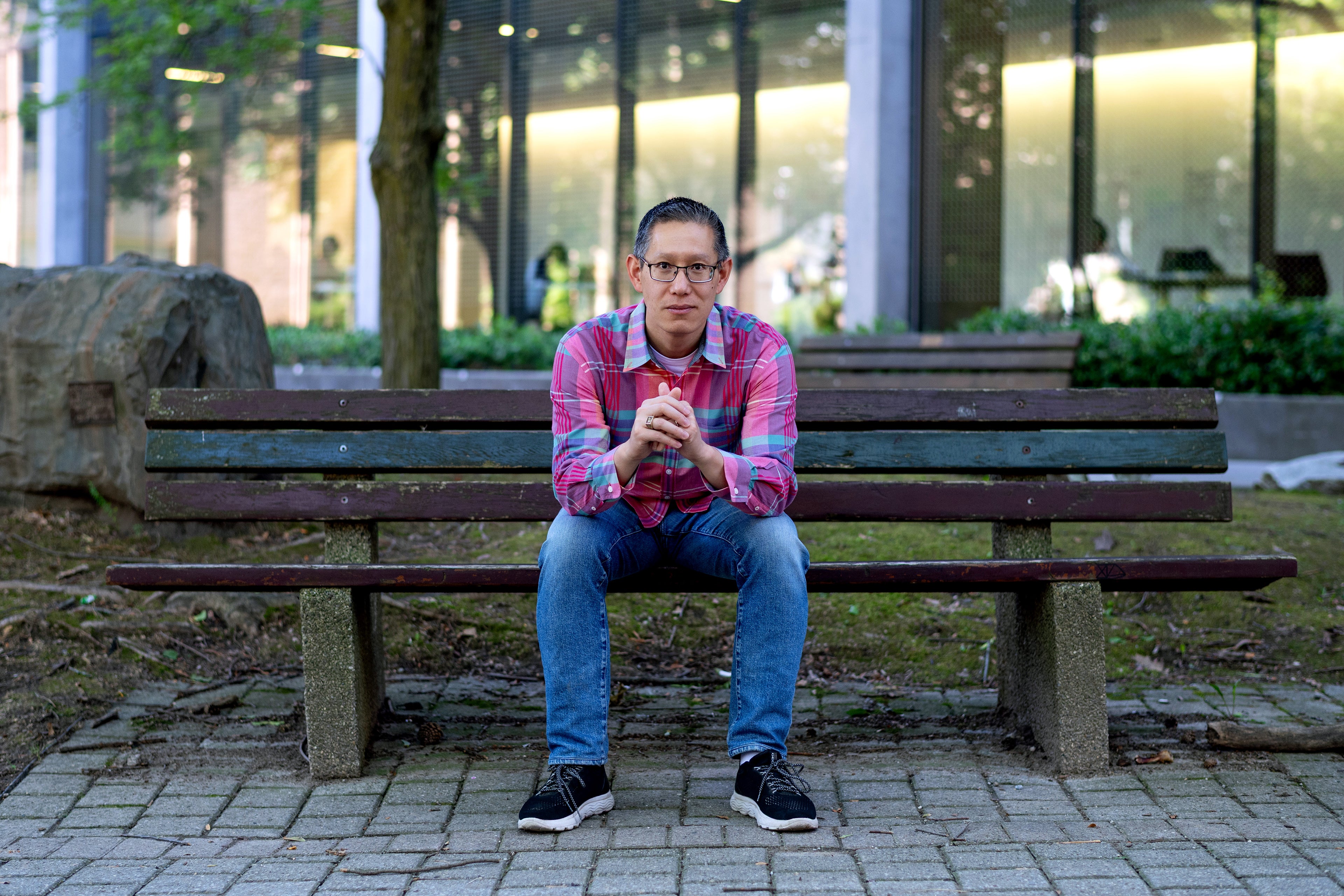
Jimmy Lin is a Professor at the Cheriton School of Computer Science, where he has held a prestigious David R. Cheriton Chair in Software Systems since 2015. His research develops tools that help people make sense of large amounts of data. He works at the intersection of information retrieval, natural language processing, and data management. A prolific researcher, he has produced a large body of work in top-tier venues with major contributions that have advanced the state of the art in information retrieval and natural language processing.
Professor Lin is also a Fellow of the Association for Computing Machinery, a Fellow of the Association for Computational Linguistics, and a member of the SIGIR Academy.
Professor Lin’s research
Posing questions and seeking answers to them are as old as humanity. Question-answering technologies seek to address the information needs of users by directly providing a cogent answer, rather than simply retrieving documents that users must then sift through. While these capabilities are taken for granted in the era of generative AI and large language models, mere decades ago question-answering systems existed only in science fiction. Since the late 1990s, Professor Lin has been a pioneer in this research, helping users find answers in large stores of knowledge. Many of today’s capabilities can be traced back to ideas developed in his research. Throughout his career, Professor Lin has focused on high-impact problems and translated scientific innovations into real-world applications.
Professor Lin’s early research demonstrated the effectiveness of simple, data-driven techniques that exploit data redundancy, which represented a significant departure from knowledge-engineering approaches that preceded his work. He advocated for a “big data” approach years before the term had even been coined. These insights were adopted by many in industry and academia building advanced search systems, and later incorporated into IBM’s Watson system, which famously won Jeopardy! in 2011. His research has also influenced question-answering capabilities in intelligent agents such as Apple’s Siri.
From the mid- to late 2000s, Professor Lin led groundbreaking work in clinical question answering to support evidence-based medicine. His research showed how knowledge structures can be used to extract and organize relevant answers from the medical literature for healthcare professionals. During a visiting appointment at the U.S. National Library of Medicine at the National Institutes of Health, Professor Lin incorporated his research into the “Similar Articles” feature of PubMed, the leading search engine for life sciences literature. Modern AI-powered search engines such as OpenEvidence, which help physicians search and synthesize peer-reviewed medical literature, can trace many capabilities from innovations that Professor Lin developed years ago.
During the 2010s, Professor Lin made significant advances in balancing effectiveness and efficiency in retrieval pipelines for question answering and beyond. At a high level, users expect systems to be both accurate and fast, but these goals are often at odds with each other. Systems that return high-quality results tend to be slow because of the computational demands of deeper analyses, while fast techniques tend to sacrifice quality. Finding the best balance between these competing demands is both a significant research challenge and a practical concern for large-scale information systems.
Professor Lin’s work on multi-stage retrieval provides a way to achieve both goals by building pipelines that use fast-but-coarse methods to generate candidates, which are then refined by slower-but-better methods. He further showed that machine learning techniques can be used to build these cascades based on desired trade-offs. These ideas remain relevant today and are widely deployed in generative AI systems that do a good job understanding user intent, but are relatively slow and costly.
More recently, Professor Lin has helped shape the application of large language models to information retrieval and question answering. In 2021, he co-authored Pretrained Transformers for Text Ranking, a textbook that synthesizes modern research on information retrieval in the context of large language models, bringing together methods that have become best practices in both academia and industry.
Professor Lin was the first to show how transformers, which underpin large language models, can be applied to question answering, and pioneered early work on their use for reranking candidates generated from traditional keyword search engines in multi-stage architectures. He was also the first to conceptualize the relationship between dense representations derived from large language models and traditional sparse representations, and to combine the two approaches into what is known today as “hybrid search.” Finally, Professor Lin has made several important contributions to building benchmark datasets and evaluations. The impacts of these innovations are felt throughout industry: Microsoft, Google, Meta, OpenAI, Anthropic, Cohere, and other large enterprises as well as numerous startups have adopted techniques invented by Professor Lin or used datasets and benchmark evaluations that he has built.
The cornerstone of Professor Lin’s research is his focus on scientifically interesting problems with significant real-world impact. To this end, he has played a direct role in translating research innovations into industry applications. From 2010 to 2012, he spent an extended sabbatical at Twitter, now known as X, building critical services that connected users with relevant content and developing infrastructure that supports data science. More recently, he has served as the chief scientist of three startups, helping to connect academic innovation with commercial value.
Professor Lin passionately advocates for reproducibility in the computational sciences. In addition to developing novel techniques for information seeking and beyond, he seeks to share those innovations with the world via the software artifacts he builds. For example, his open-source Pyserini toolkit, designed to support reproducible information retrieval research, has been downloaded more than one million times to date. His software artifacts are used by Alibaba, Google, Huawei, Hugging Face, IBM, Meta, Microsoft, Salesforce, Snowflake, and many other organizations around the world. These open-source packages play an important role in driving adoption.
Looking forward, Professor Lin is exploring an emerging world where users seek knowledge in collaboration with software agents, which requires challenging fundamental assumptions about system design and reimagining human information-seeking processes. While the capabilities of systems at our disposal have advanced immeasurably over his career, “there remains much more work to do,” he reflects. Information needs have increased in complexity as systems have improved, but users often still can’t find what they’re looking for. “That’s my fault,” Professor Lin says, “and I want to fix that.”
Through his sustained and foundational contributions to question-answering systems, information retrieval, and natural language processing, Professor Lin has helped shape both the science and practice of modern search. His innovations have been adopted by companies and incorporated into products used daily by millions of people around the world. His research is recognized internationally for its originality, significance, and impact.
Fellows of the Royal Society of Canada at the Cheriton School of Computer Science
In 2026, two faculty members from the Cheriton School of Computer Science were elected Fellows of the Royal Society of Canada. With the election of Professor Ian Goldberg also this year, the number of Cheriton School faculty members who have been named Fellows of the Royal Society of Canada increases to 14.
Previously elected Fellows are Professors N. Asokan, Shi Ben-David, Raouf Boutaba, Richard Cleve, Ihab Ilyas, J. Alan George, Srinivasan Keshav, Ming Li, Renée J. Miller, J. Ian Munro, M. Tamer Özsu, and Douglas Stinson.
Royal Society of Canada
Founded in 1882, the RSC comprises the Academy of Arts and Humanities, Academy of Social Sciences, Academy of Science, and the RSC College. The RSC recognizes excellence, advises the government and society, and promotes a culture of knowledge and innovation within Canada and with other academies around the world.