WebNotice

Please note: This seminar will take place in DC 1304.

Xupeng Miao, Postdoctoral Researcher
Computer Science Department, Carnegie Mellon University

In this talk, I will introduce my work on machine learning (ML) parallelization, a critical endeavor to bridge the significant gap between diverse ML programs and multitiered computing architectures. Specifically, I will explore ML parallelization at three distinct yet interconnected levels.

Please note: This seminar will take place in DC 1304.

Misha Khodak, PhD candidate
Computer Science Department, Carnegie Mellon University

Advances in machine learning (ML) have led to skyrocketing demand across diverse applications beyond vision and text, resulting in unique theoretical and practical challenges. The vastness of use cases calls for general-purpose yet customizable tools for tackling large subclasses of such problems.

Thursday, April 4, 2024 4:30 pm - 6:30 pm EDT (GMT -04:00)

CS 383 Computational Art Exhibition

CS/FINE 383 is a third-year studio course where students work in an interdisciplinary environment to combine computer science principles with fine art technical and conceptual skills. Experience novel computational art works and aesthetic experiences using generative agents, advanced computer vision, distributed computing, and more.

Where is the Computational Art Exhibition?

Please note: This seminar will take place in DC 3317 and online.

Mahsa Derakhshan, Assistant Professor
Khoury College of Computer Sciences, Northeastern University

In this talk, we discuss the stochastic vertex cover problem. In this problem, G is an arbitrary known graph, and G* is an unknown random subgraph of G containing each of its edges independently with a known probability p. Edges of G* can only be verified using edge queries. The goal in this problem is to find a minimum vertex cover of G* using a small number of queries.

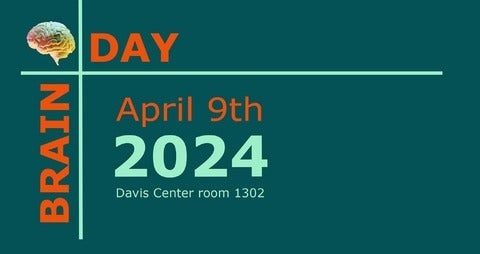
Tuesday, April 9, 2024 8:30 am - 4:15 pm EDT (GMT -04:00)

16th Annual Waterloo Brain Day

Waterloo’s Centre for Theoretical Neuroscience supports the development of robust explanatory theories of mind and brain through education and research.

In pursuit of that goal the CTN has invited four internationally renowned speakers to present generally accessible lectures from each of the perspectives of neuroscience, computational neuroscience, psychology and philosophy on the ideas of mind, brain, theories and models.

Please note: This seminar has been CANCELLED.

Juba Ziani, Assistant Professor
H. Milton Stewart School of Industrial and Systems Engineering, Georgia Tech

In this talk, I will be discussing “personalized” (or “individualized”) differential privacy, where different individuals can be offered different epsilons simultaneously within the same computation. I will be presenting two of my recent works on personalized DP in the central model: