Current students

Please note: This PhD defence will be given online.

Akshay Ramachandran, PhD candidate
David R. Cheriton School of Computer Science

Supervisor: Professor Lap Chi Lau

It’s no secret that our everyday technologies gather personal data. But these increasingly entrenched conveniences, from Internet of Things–enabled smart TVs to online voting systems to crowdfunding platforms, can also perform harmful surveillance.

Knowing how tools track user behaviour and collect personal information is important. Understanding their implications for social inequality within Canada and globally is perhaps even more pressing. What’s more, the challenge demands multiple areas of expertise.

Please note: This PhD defence will be given online.

Jumyung “JC” Chang, PhD candidate
David R. Cheriton School of Computer Science

Supervisor: Professor Christopher Batty

Scarcely a year goes by without smartphone, tablet and computer manufacturers releasing yet another new model. And this never-ending stream of improved digital products means that older devices are often disposed of, whether relegated to a junk drawer or traded-in, recycled, sold or donated to others. But when you dispose of a device, are you certain you’ve securely deleted all of your personal data?

Please note: This master’s thesis presentation will be given online.

Zongliang Ji, Master’s candidate
David R. Cheriton School of Computer Science

Supervisor: Professor Olga Veksler

Please note: This master’s thesis presentation will be given online.

Rasoul Akhavan Mahdavi, Master’s candidate
David R. Cheriton School of Computer Science

Supervisor: Professor Florian Kerschbaum

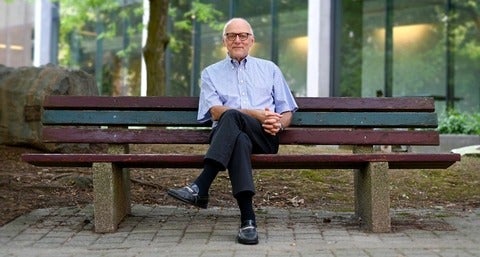
University Professor M. Tamer Özsu has received the 2022 IEEE Innovation in Societal Infrastructure Award, an honour conferred for significant technological achievements and contributions that establish, develop and proliferate innovative societal infrastructure systems through the application of information technology with an emphasis on distributed computing systems.

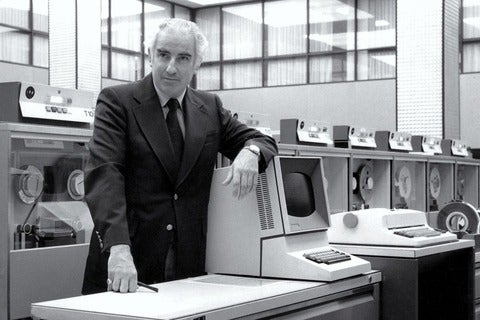
With exceptional leadership in the field of computer science and his dedication to making computers accessible to a wider audience, James Wesley (Wes) Graham (1932–1999) was known as the “Father of Computing” at the University of Waterloo. Serving as early director of the University of Waterloo’s Computing Centre, Wes had an active role in shaping computer science education worldwide. His experience teaching at Waterloo inspired the creation of software to support education.

Please note: This PhD seminar will be given online.

Stavros Birmpilis, PhD candidate
David R. Cheriton School of Computer Science

Supervisors: Professors George Labahn, Arne Storjohann