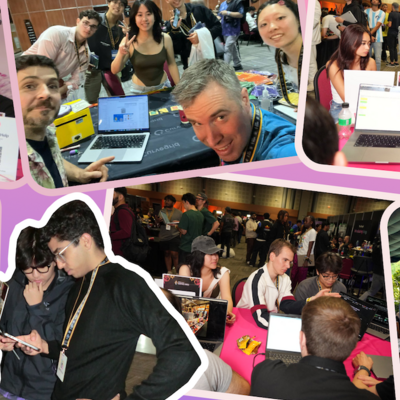
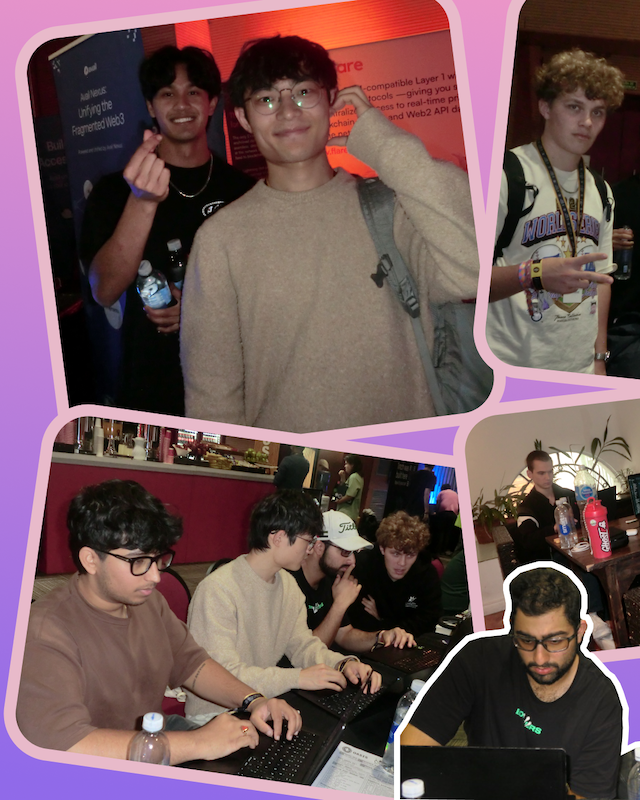
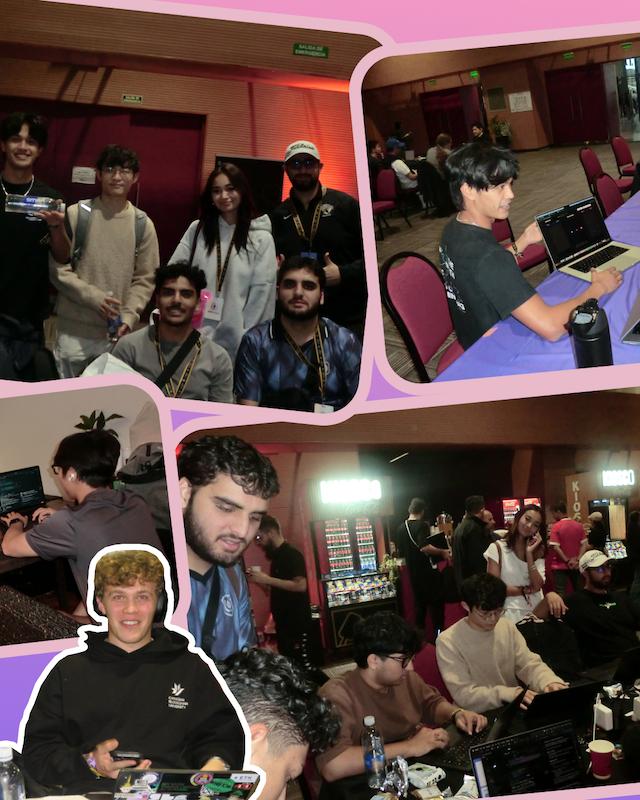
Waterloo Blockchain flew 18 students from the University of Waterloo and Wilfrid Laurier University to South America to compete at ETHGlobal Buenos Aires.
Founded by Waterloo alums Liam Horne (BCS ‘14) and Kartik Talwar (BSc ‘16), ETHGlobal is one of the largest developer-focused communities in Ethereum. It supports blockchain enthusiasts of all backgrounds by providing guides, job opportunities, and hackathons. Since 2017, it has hosted more than 40 hackathons across the globe, from Tokyo to Paris to Waterloo.
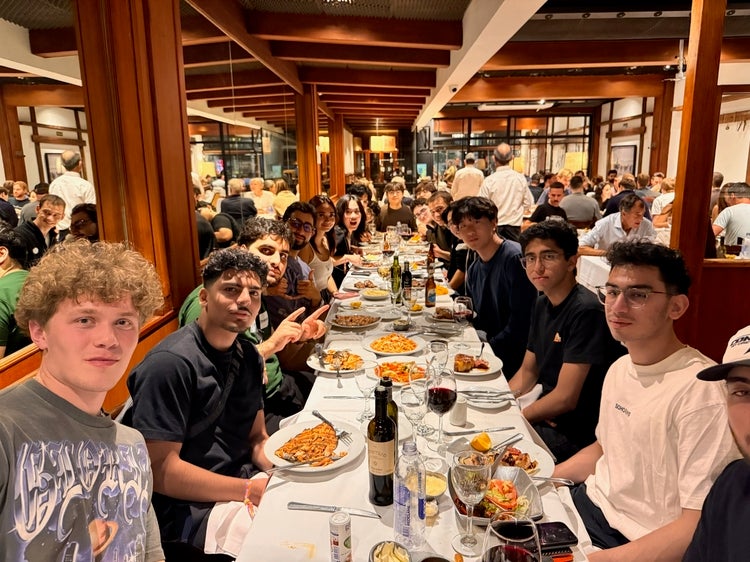
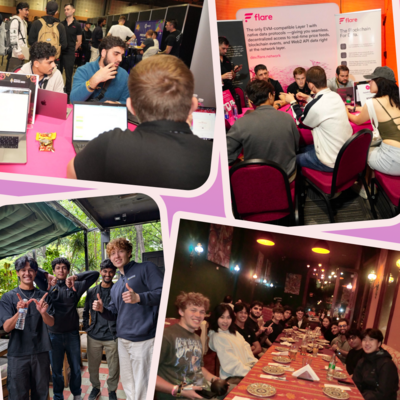
Waterloo Blockchain enjoying a feast after pushing to prod during the hackathon grind.
This year, the hackathon took place in Buenos Aires, Argentina, from November 21 to 23, 2025. The event drew 1,750 participants from 84 countries, who built 475 projects in under 36 hours.
With a pool of $500,000 USD, Waterloo Blockchain scored 5% of the prizes— bringing home $25,850 USD. While in Argentina, they also attended Devconnect, a five-day conference hosted by the Ethereum Foundation.
“Hackathons are one of the best ways for students to learn fast, stay plugged into industry trends, and unlock top co-op opportunities around the world. Through our Ignition Program, we’re bringing those opportunities directly to first and second-year students,” says Waterloo Blockchain’s Vice-President, Pravesh Mansharamani.

Repping Waterloo wherever they go!
What makes this achievement noteworthy is the success of Waterloo Blockchain’s student-led Ignition Program. This initiative focuses on bringing talented first and second-year students, regardless of their experience, to highly competitive international hackathons. The goal is to provide them with intensive, real-world development experience and immediate exposure to industry leaders.
“It’s impossible not to capitalize on the intersection between the Blockchain industry and Waterloo’s community,” says Waterloo Blockchain member Zayaan Siddiqui. “This club does such a remarkable job of supporting students in their endeavours, and our success in Argentina and past conferences is only a glimpse of what’s to come in 2026. If you’re someone with a budding interest in web3 and a dream of winning worldwide, Waterloo Blockchain is unequivocally the place for you.”
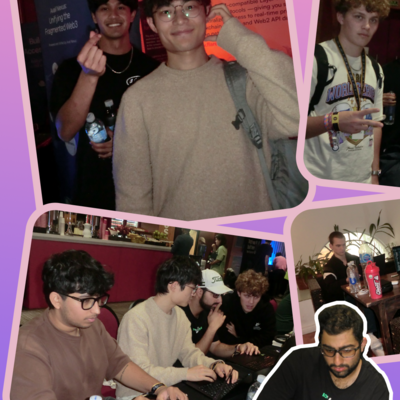
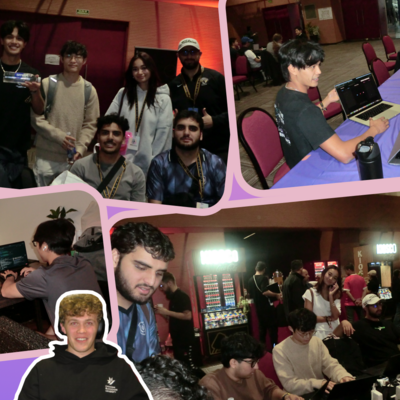
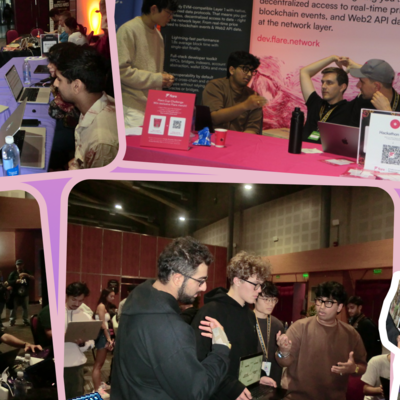
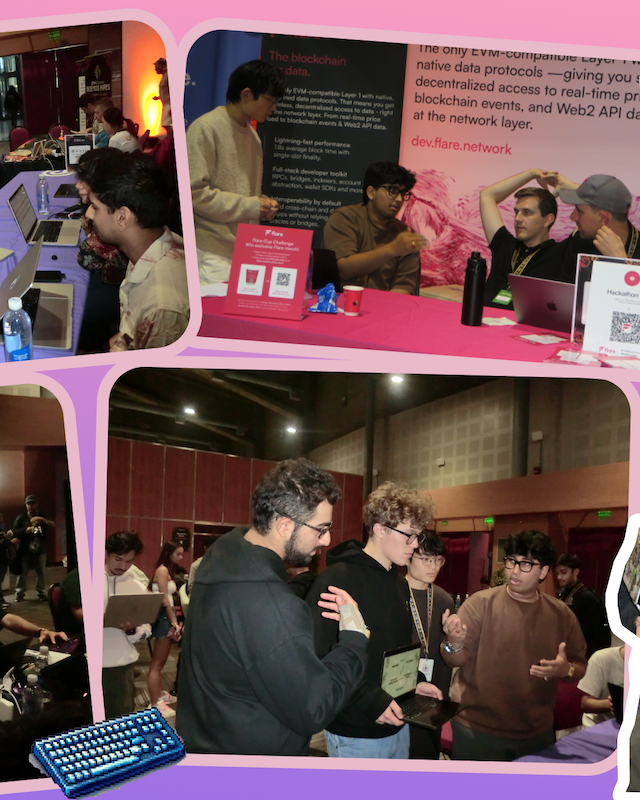
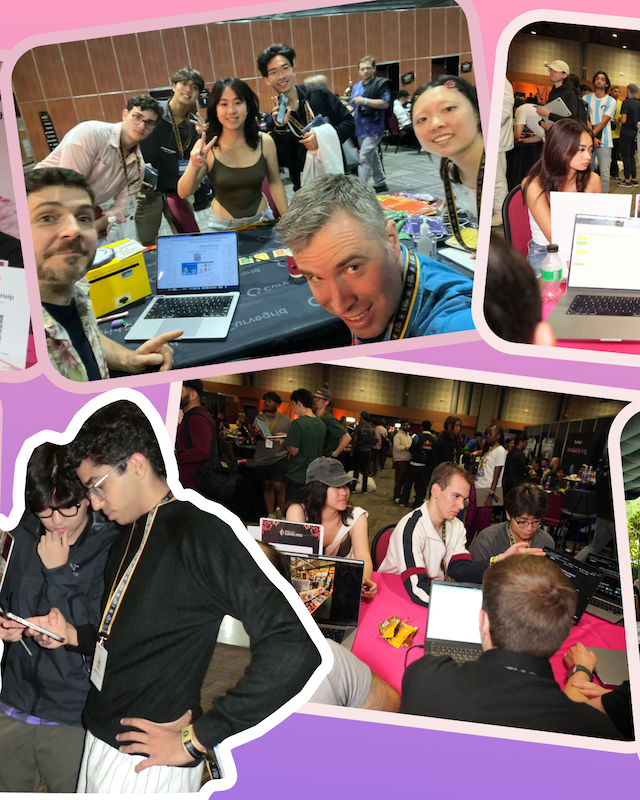
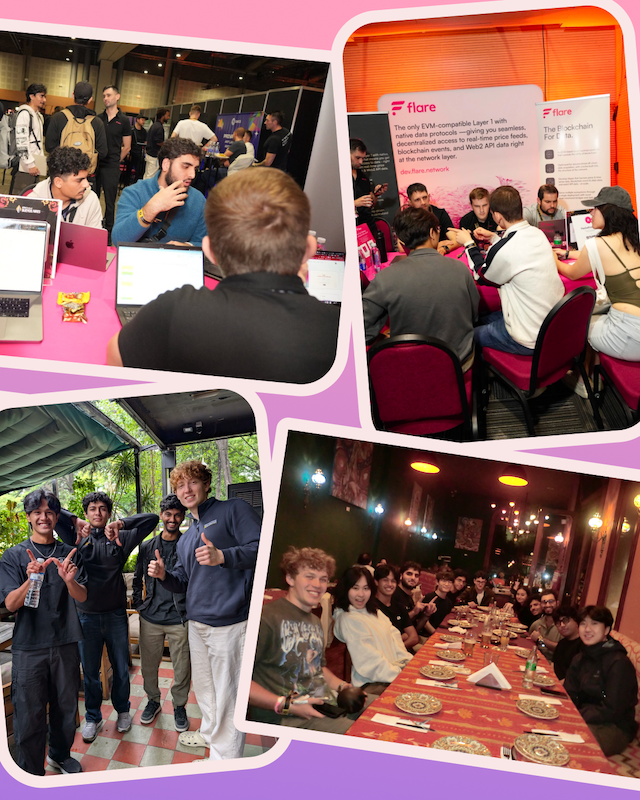
From levelling up prediction markets to democratizing finance platforms, students showcased their creativity, resilience and blockchain expertise. Below are descriptions of the award-winning projects.
Ensura
Students: Yazdan Rasoulzadeh (Waterloo’s & Laurier’s Computer Science and Business), Vansh Wahi (Computer Science), and Tejas Anand (Computer Engineering)
Prizes: 0G’s Building Onchain AI dapps with 0G intelligent L1 Third Place ($2,000) and World Pool Prize
This innovative fintech platform is making insurance more transparent, affordable, and accessible. Ensura eliminates the “traditional middle-man” by connecting insurance seekers directly with providers.
Initially, users must submit an application where they list their personal information, including their age, nationality, and their preferred insurance, such as travel or health. They can also list any questions or concerns, like their coverage preferences or medical conditions.
Within seconds, Ensura’s AI model assesses the candidate’s risk profile and needs and provides an AI-powered insurance quote. Alternatively, users can browse through a list of underwriters and their fees and approval rate. This streamlined process allows insurance seekers to find an accurate and personalized insurance plan right at their fingertips.
FanForge
Student: Suyog Joshi (BMath ‘23)
Prize: Chiliz’s the Future of Fan Ownership First Place ($3,000)
Suyog is levelling up trading cards and sports predictions using dynamic non-fungible tokens (NFTs).
Users can trade and collect two types of cards on FanForge: player cards, featuring the world’s top athletes like Tom Brady and Lionel Messi, and match events. The latter refers to common actions that occur during a game, such as penalty kicks, overtime, and red cards. Using these cards, players can make predictions for upcoming matches. For every accurate prediction, the player will level up their NFT. Overall, this platform offers a new and dynamic way for fan interactions and loyalty.
fYield
Students: Ali Syed (Waterloo’s & Laurier’s Computer Science and Business), Rehan Anjum (Computing and Financial Management) and Elizabeth Ciceu (Global Business and Digital Arts)
Prize: Flare Network Main Track Third Place ($1,000)
The trio built fYield, which connects FXRP token holders on Flare Network with other blockchain-based lending markets, particularly Aave and Curve. Unfortunately, Flare Network’s FXRP token holders currently have limited yield-generating opportunities, while other Ethereum protocols offer three to five percent annual percentage yield on stablecoins.
With fYield, users can deposit FXRP on Flare and automatically earn AAVE or Curve lending yield, without bridging assets or interacting with Ethereum directly. They can also withdraw their yields at any time and across chains.
Goddid.Money
Students: Zayaan Siddiqui (Computing and Financial Management), Eric Liu (Waterloo’s & Laurier’s Math Science and Business), Pravesh Mansharamani (Math) and Konrad Weber (Accounting and Financial Management)
Prizes: Flare Network Main Track First Place ($5,000), Pyth Network Pool Prize ($1,000), and Privy Best App using Signers with Privy ($1,600)
Oftentimes, Polymarket traders have strong track records but are unable to access liquidity, especially when their funds are locked in open positions or spread across platforms.
Fortunately, Zayaan, Eric, Pravesh and Konrad are addressing this through their app, goddid.money. Built using Flare, Privy, and Pyth Entropy, goddid.money converts a trader’s verifiable Polymarket history into an on-chain credit profile that powers a real credit score. With this score, users can borrow FXRP, a synthetic XRP asset generated through the FAssets system, directly into a Privy-controlled embedded wallet.
ParlayMarket
Students: Luka Spinoti (Computer Science), Kurtis Lin (Management Engineering), and Sabrina Fang (Waterloo’s & Laurier’s Computer Science and Business)
Luka, Kurtis and Sabrina are elevating betting with blockchain. Their platform allows users to create, trade, and settle multi-leg parlays — a single bet that links together two or more wagers — on predictable market outcomes. To create a parlay, a user can browse through a list of current events and bet “yes” or “no” for each event. For example, a user could create a parlay, betting that Justin Trudeau will propose to Katy Perry and that Canadian home prices will not drop in 2026.
The students built ParlayMarket using Flare Network’s unique blockchain infrastructure and its Flare Data Connector (FDC) oracle system, which integrates real-world prediction market data on-chain with cryptographic verification.
ReviewSync
Student: William Wang (BCS ‘25)
Prize: World Pool Prize
Hackathon extraordinaire William Wang didn’t have a soft landing in Argentina. He had to download Didi, Argentina’s premier ride-sharing app, instead of his go-tos, Uber and Lyft. Yet, his rides kept getting cancelled because he had no ratings that Didi drivers could use, a frustrating experience as William had built a five-star review on Lyft over the years.
This mishap inspired him to build ReviewSync, which imports a user’s rating on various platforms, like Airbnb or Facebook Marketplace, and consolidates them onto blockchain. When a user joins a new platform, it can assign them a score by looking at their past ratings, number of verified platforms and duration on the platforms. Now, users don’t have to start from scratch when they’re travelling through apps.
Scale.fun
Students: Alex Lu (Computer Science) and Hitarth Khurana (Computer Science)
Prize: Self’s Best Self On-Chain SDK Integration First Place ($5,000)
One of the biggest barriers to AI development is the availability high-quality and ethically sourced training data. Instead, data set receivers and annotators must contact a major AI lab, which can be costly and time-consuming.
Scale.fun is streamlining this process by creating a decentralized marketplace: AI labs can upload their training sets and have them labelled by annotators. For every labelled dataset, an annotator can receive cryptocurrency earnings. In addition, AI labs can buy or sell any labelled dataset. Altogether, these features can democratize and spur AI research.
SlitherMoney
Student: Xavier D’Mello (Laurier’s Computer Science)
Prizes: Flare Network Bonus Track ($1,000), Hardhat’s Best Project Built using Hardhat3 ($5,000) and PythNetwork’s Best Use of Pyth Entropy ($1,250)
Hackathon champ Xavier made the perfect game for those who love “snaking” their friends and Slither.io, a multiplayer version of the beloved Snake video game.
When players first join SlitherMoney, they must wager a set amount of cryptocurrency. Next, they play Slither.io, where they are given 30 seconds to consume five apples. The winner then receives the betted money.
Xavier built SlitherMoney using Pyth Entropy, which randomizes the apple placements. He also hashed each player’s move, preventing players from lying about their movements. Altogether, these rattling features create a fair yet fun game.