Six students at the Cheriton School of Computer Science have received Ontario Graduate Scholarships (OGS).
For more than 50 years, the Ontario government has awarded the OGS to exceptional graduate students who demonstrate academic excellence, strong research ability and potential, and exceptional leadership. Recipients can receive up to $15,000, funded jointly by the provincial government and their home university.
Applications for the OGS are processed in the same round as the Queen Elizabeth II Graduate Scholarship in Science and Technology (QEII-GSST) program, and applicants are considered for either award. This year, seven graduate students also received QEII-GSST funding.
From enhancing AI safety and reliability to paving the way for self-driving cars, this year’s cohort of OGS recipients offers a glimpse into Ontario’s next generation of researchers.
Kath Choi
Co-supervisors: Professors Freda Shi and Krzysztof Czarnecki
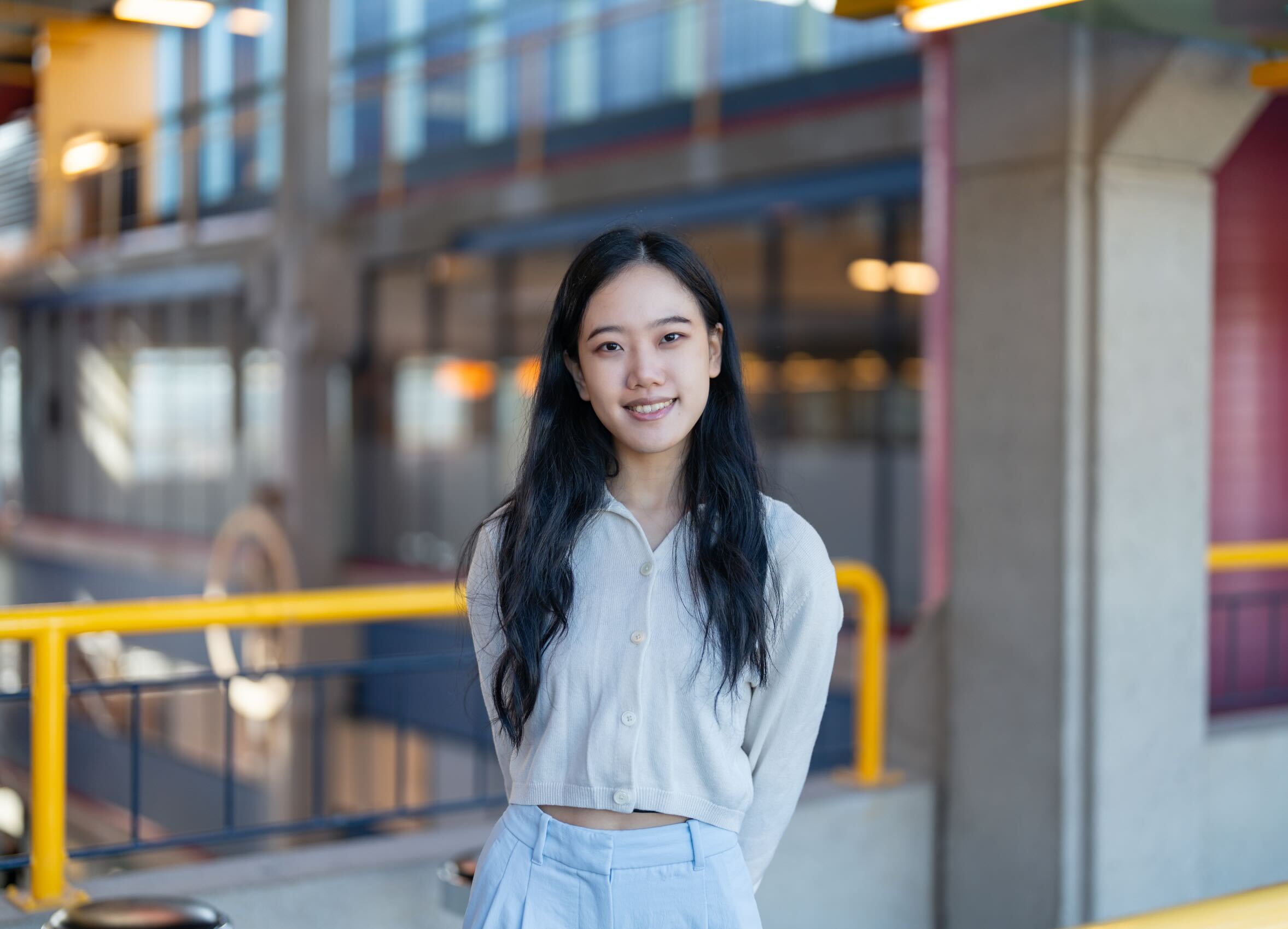
AI is widely used across society, from healthcare to public policy. As a result, there is a growing need for AI systems that are secure, transparent, and resistant to manipulation. For example, someone could intentionally change an AI system’s behaviour through hidden instructions or compromised training data, leading to misleading, harmful or biased outputs.
PhD student Kath Choi is addressing these challenges by investigating how AI systems can be influenced and whether those influences are detectable. She is also interested in developing methods to safeguard AI systems.
Most researchers study attack methods and defence techniques in isolation, making it difficult to understand the broader picture of AI risks. However, Kath is interested in creating a unified framework for categorizing interventions, such as malicious attacks and intentional modifications.
Ultimately, her work could enhance AI security and safety, from helping developers identify risks before deployment to supporting policymakers and regulators in creating auditing standards and accountability mechanisms for advanced AI systems.
Thomas Driscoll
Supervisor: Professor Daniel Vogel
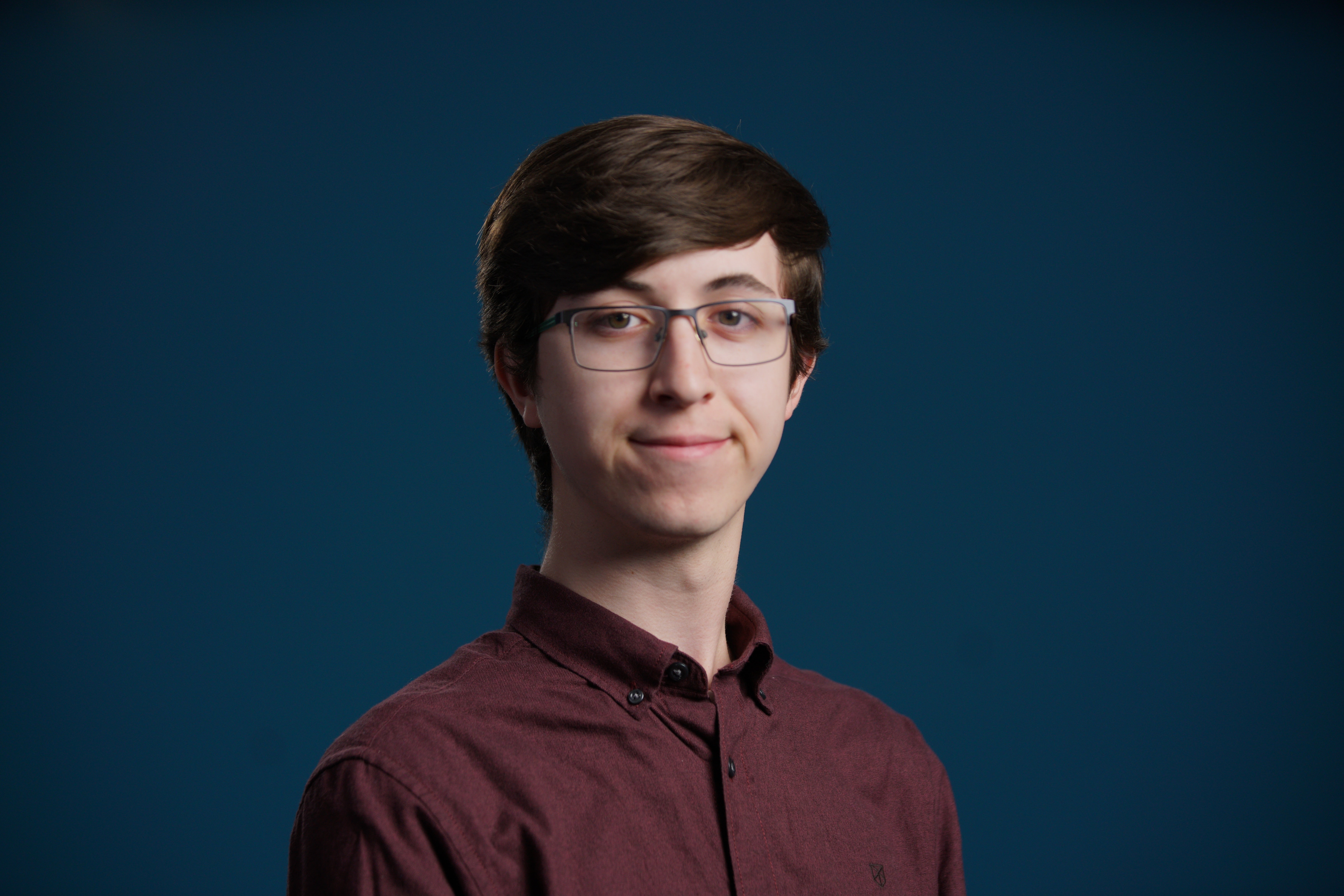
As a master’s student at Waterloo, Thomas Driscoll studied Osu!, a fast-paced rhythm game. If a player misses too many notes — because they didn’t click the circles on time or they dragged the slider too fast — they fail the song and must start over. As a result, many top players boast exceptional dexterity, often pushing the limits of spatial and time-bound precision. Fascinated by these abilities, Thomas interviewed these players to better understand how they developed these skills.
When Thomas begins his PhD studies in September, he will build on these insights to explore input ability and performance, defined as the ability to successfully manipulate a physical input device such as a computer mouse or a drawing pen and tablet. He hopes to create novel input devices or methods that can improve people’s input ability, whether it’s rebuilding their motor skills after an injury or improving their performance in video games. He also aims to create a human pointing performance model that can assess and predict human input performance in contexts that require spatial and temporal precision.
Henry Guo
Supervisor: Professor Krzysztof Czarnecki

Henry Guo’s master’s research is laying the groundwork for one of the century’s most anticipated game-changers: autonomous driving. He is building and training AI models that can perceive and act on their surroundings. One of his primary research areas is Vision Language Action Models (VLAs), a type of AI model that can understand real-world dynamics, including spatial dynamics and physics, and then turn that knowledge into actions within the same environment. These models gather inputs such as images, point clouds, and past states to predict the future state of their environment and then act on them — much like how large language models (LLMs) predict the next word in a sentence. Unlike LLMs, however, VLAs deal with much more diverse multi-modal inputs and output actions which actively affect the observable future. Henry is also interested in multimedia generation, including image and video generation. Together, these research paths could advance AI perception, paving the way for safer and more efficient self-driving cars.
Lucas Kopp
Co-supervisors: Professors Robin Cohen and Lukasz Golab
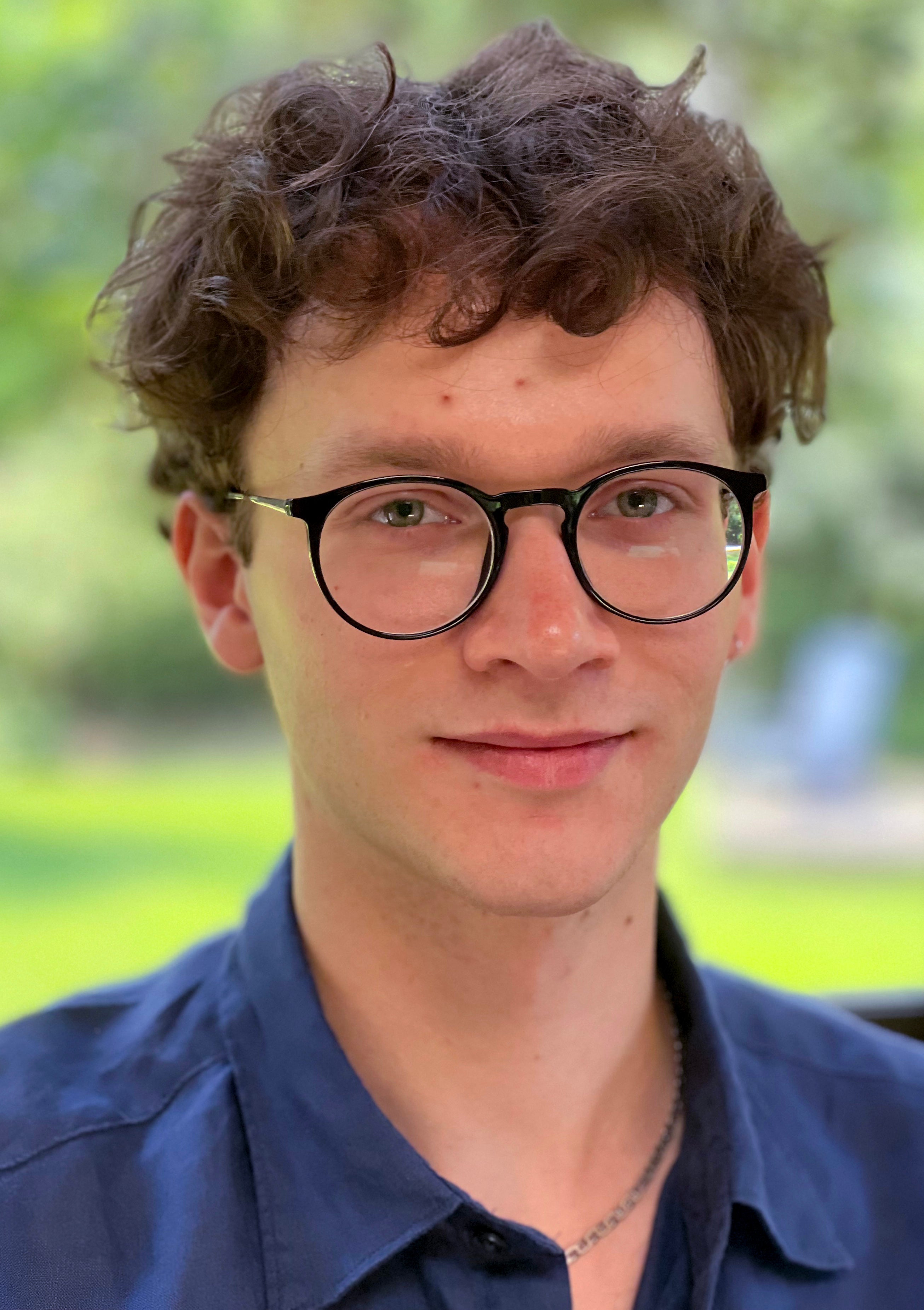
Since the rise of AI, many people have noticed that it acts like a “yes person.” For example, if a user presents a flawed business plan with high confidence, an LLM may provide an overwhelmingly positive response. Researchers at Stanford University have found that LLMs are overly agreeable when offering interpersonal advice, going as far as affirming the user’s problematic behaviour. This concept, also known as “LLM sycophancy,” has raised major safety and ethical concerns.
According to master’s student Lucas Kopp, LLM sycophancy stems from various factors, such as preference-based training. This method rewards an LLM for selecting the correct or desired answer from a pair of options, thereby influencing its behaviour and reasoning. However, preference-based post-training may encourage agreeable answers. On a social level, LLMs may be geared to preserve a user’s self-image.
As a graduate of Western University’s Philosophy and Computer Science programs, Lucas will leverage his interdisciplinary background to address this problem. He will study which features of a user’s prompt are most likely to receive a sycophantic response and how to mitigate this effect.
This scholarship comes one year after Lucas received a prestigious Vector AI Scholarship.
Taite LaGrange
Co-supervisors: Professors Therese Biedl and Sophie Spirkl
Taite LaGrange’s doctoral research focuses on graph theory, one of the foundational pillars of computing.
“You can think of a graph as dots, also known as vertices, and the lines connecting them as edges,” explains Taite. “A whole host of real-world problems model naturally on graphs.”
For example, one can plan a new transit route by mapping out a region’s hot spots as vertices, and any intersecting roads as edges. By understanding a graph’s structure, researchers can develop algorithms to solve various problems from computer networks to DNA sequencing.
Taite believes that the recently discovered twin-width parameter is key to designing effective algorithms. This parameter quantifies a graph’s structural complexity by measuring how similar it is to a cograph, a type of graph that can be reduced to a single vertex by repeatedly merging twins or vertices that share the same neighbours, hence the name twin-width.
“If we can show that the twin-width of a graph is at most sub-linear with respect to the number of vertices, then algorithms that are single-exponential without this bound become sub-exponential with it,” explains Taite.
James You
Supervisor: Professor Ondřej Lhoták
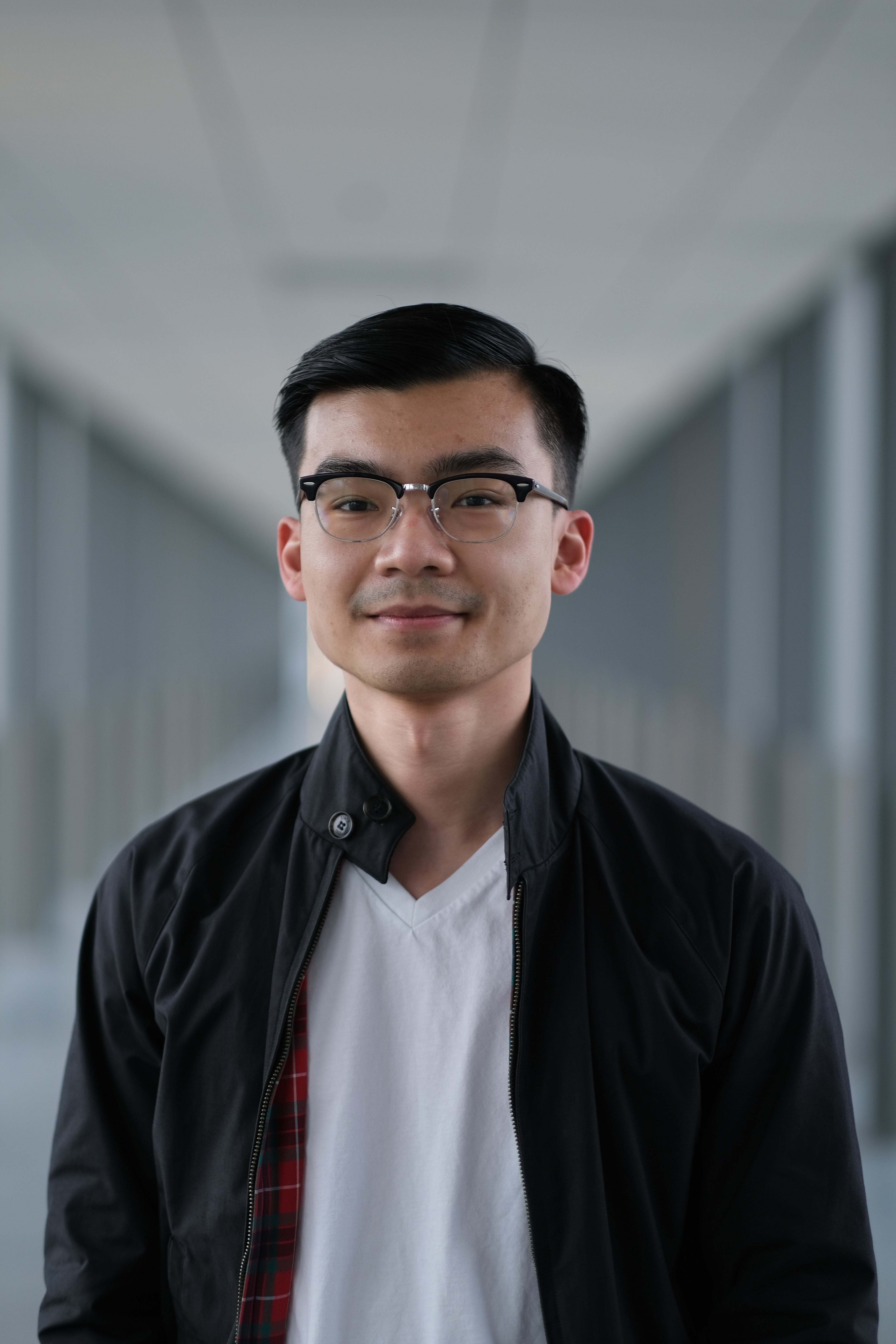
In today’s tech-driven world, making software faster and more efficient remains a fundamental challenge. One approach relies on abstractions, constructs that allow programs to be expressed at a high level without the concern of underlying details. However, abstractions tend to perform more slowly than their simpler counterparts.
Over the course of his PhD, James You aims to make abstractions more robust by leveraging advanced type systems, which are a set of rules that define and enforce constraints on a program’s data and operations, often done to prevent errors and enhance the code. By harnessing these systems, James hopes to develop new and innovative compiler optimization techniques.
Notably, James’ research can enhance Scala, a rising programming language that relies on high-level abstractions. As part of Google’s 2026 Summer of Code program, he is collaborating with members from the Scala community to deliver a new performance-oriented language feature.